Air Compressor Troubleshooting Guide: Practical Solutions for Industrial Systems
Learn how to diagnose and fix common air compressor problems such as pressure loss, overheating, and startup failures with this practical troubleshooting guide for industrial systems.
3/19/20264 min read
Air Compressor Troubleshooting Guide: Practical Ways to Identify and Fix Common Problems
Air compressors are a critical part of industrial operations, especially in manufacturing environments where stable air supply directly affects production efficiency.
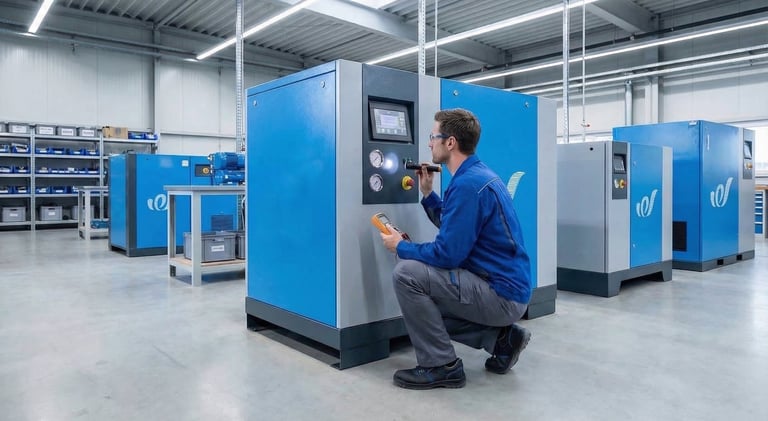
When problems such as pressure loss, overheating, or unexpected shutdowns occur, they can quickly disrupt workflow and increase operating costs.
This air compressor troubleshooting guide focuses on practical diagnostic steps and real-world solutions to help operators restore system performance quickly.
For a better understanding of system fundamentals, you can refer to compressed air system guide(https://www.energy.gov/eere/amo/compressed-air-systems).
What Should Be Checked First Before Troubleshooting?
Before starting any troubleshooting work, always ensure the system is in a safe condition. Disconnect the power supply and release all compressed air pressure to avoid safety risks.
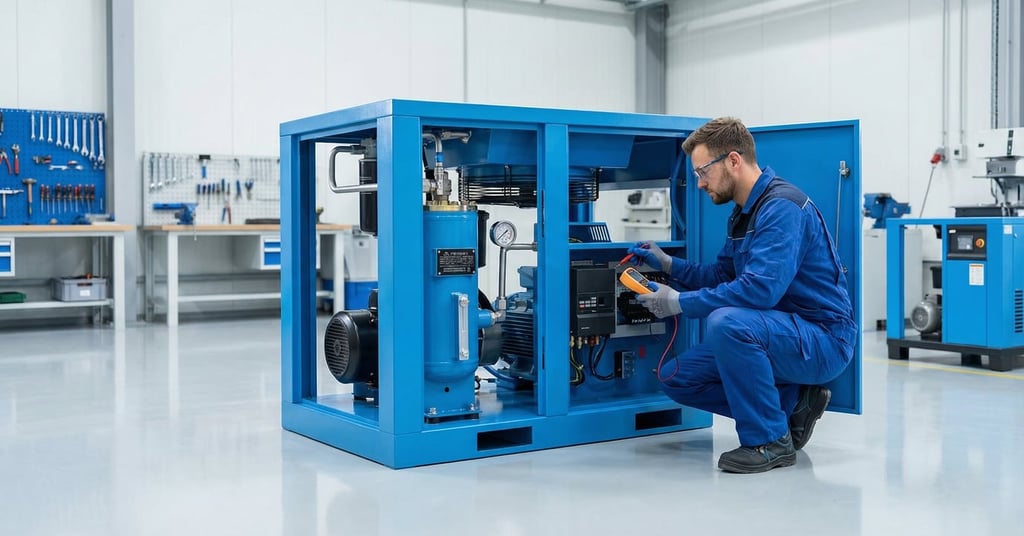
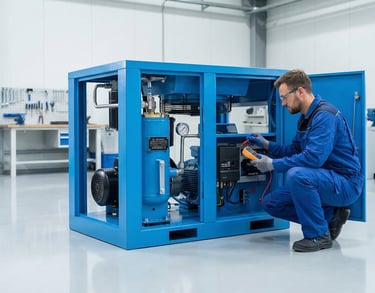
From an operational perspective, many issues can be identified early by checking system alarms, controller messages, or maintenance records. Reviewing the equipment manual can also help narrow down possible causes.
Quick Inspection Steps for Common Issues
In many cases, compressor problems are caused by basic issues that can be identified within minutes. A structured inspection process can significantly reduce troubleshooting time.
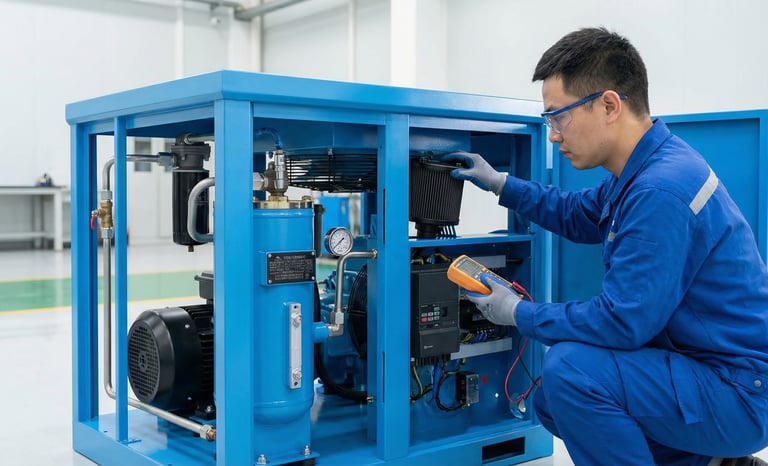
Start by confirming that the power supply is stable and that no protection devices have been triggered. Electrical instability is a frequent cause of unexpected shutdowns.
Next, check the intake system. Dirty or clogged air filters restrict airflow and can reduce both efficiency and output pressure.
Lubrication is another key factor. Low oil levels or degraded oil quality can increase internal friction and lead to overheating.
Finally, inspect the compressed air network. Leaks in pipelines, fittings, or valves often go unnoticed but can significantly impact system performance.
How to Diagnose Air Compressor Pressure Loss
Pressure loss is one of the most frequent issues in industrial compressed air systems. In large facilities, even small leaks can result in substantial energy loss over time.
Typical causes include air leakage, excessive demand from connected equipment, clogged filters, or undersized compressors. According to industrial energy efficiency research(https://www.epa.gov/energy/industrial-energy-efficiency), air leaks are a major source of wasted energy in industrial systems.
In practice, many factories experience pressure drop because the air consumption gradually increases while the compressor capacity remains unchanged. Regular system evaluation is necessary to maintain balance.
What Leads to Air Compressor Overheating?
Overheating is often a sign that the cooling or lubrication system is not functioning properly. If not addressed in time, it can shorten equipment lifespan.
Common reasons include insufficient ventilation, blocked coolers, high ambient temperature, or low oil levels.
In real operating environments, poor installation layout—such as limited airflow around the compressor—can also contribute to heat buildup. Improving airflow and maintaining cooling components are effective preventive measures.
Why Does the Compressor Fail to Start or Stop Unexpectedly?
Startup failure or sudden shutdown is usually related to electrical or control system issues.
Typical causes include motor overload protection, circuit breaker trips, wiring faults, or incorrect pressure settings.
From a maintenance perspective, repeated shutdowns may indicate deeper issues such as unstable voltage supply or component wear. These cases should be checked by qualified technicians.
Common Component Failures in Air Compressors
Beyond basic issues, some failures originate from internal components that directly affect compressor performance.
Problems with inlet valves, oil separators, or solenoid valves can prevent the compressor from loading or unloading properly.
In industrial applications, these failures often develop gradually. Early detection through routine inspection can prevent major breakdowns.
Advanced Troubleshooting in Industrial Environments
For large-scale systems, advanced diagnostic tools are increasingly used to improve maintenance efficiency.
Technologies such as vibration analysis and thermal imaging allow operators to detect abnormal conditions before they lead to failure.
These methods are especially useful in continuous production environments where downtime must be minimized.
How Preventive Maintenance Reduces Troubleshooting Needs
A well-planned maintenance strategy can significantly reduce the frequency of compressor failures.
Basic practices include regular filter replacement, oil monitoring, leak inspection, and system performance checks.
For additional technical background, you can review compressed air technical overview(https://en.wikipedia.org/wiki/Compressed_air).
Frequently Asked Questions (FAQ)
What is the most common issue in air compressors?
Pressure loss caused by leaks or system imbalance is one of the most common problems in industrial compressors.
How often should maintenance be performed?
Maintenance intervals typically range from 3 to 6 months, depending on usage intensity and operating conditions.
Why does an air compressor overheat during operation?
Overheating is usually linked to poor cooling, low oil levels, or restricted airflow.
When should a professional technician be involved?
If the issue involves electrical systems, internal components, or repeated failures, professional service is recommended.
Conclusion
This air compressor troubleshooting guide provides a structured approach to identifying and resolving common compressor issues in industrial environments.
For broader insights into industrial energy efficiency, refer to International Energy Agency(https://www.iea.org/reports/energy-efficiency).