Air Compressor Sizing Mistakes: How Wrong Selection Destroys Performance & Costs
Wrong air compressor sizing causes energy waste, pressure drops, and early failures. Learn how oversized and undersized compressors silently damage performance and cost.
COMMON FAULTS AND SOLUTIONS OF AIR COMPRESSORS
Sofiya
1/19/20263 min read
Wrong air compressor sizing causes energy waste, pressure drops, and early failures. Learn how oversized and undersized compressors silently damage performance and cost.
Yet many buyers still believe:
“Bigger is safer.”
“More HP means more reliability.”
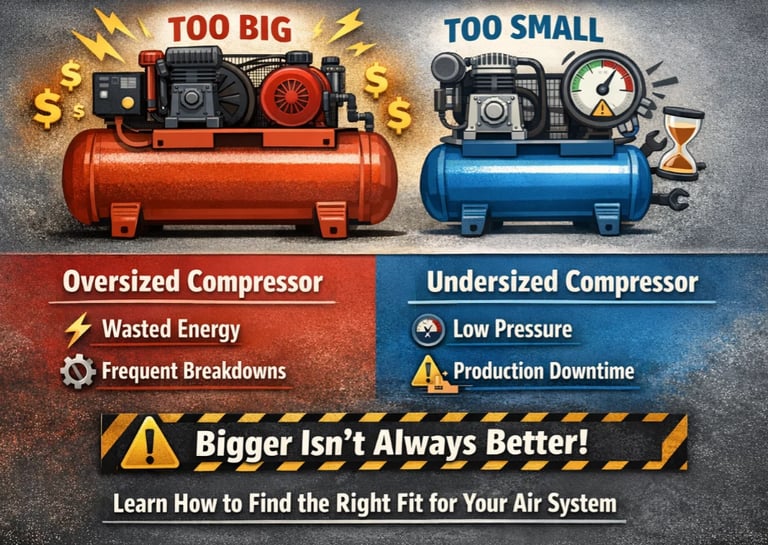
Air compressor sizing mistakes occur when compressor capacity does not match real air demand and duty cycle.Oversized and undersized compressors both cause energy waste, unstable pressure, and early component failure — even when the equipment itself is high quality.
This page explains why that thinking is wrong, how sizing mistakes silently damage your system, and how to identify whether your compressor is already the wrong size.
1.Why Air Compressor Sizing Matters More Than Brand or Price?
Brand, price, and country of origin don’t matter if the compressor size is wrong.
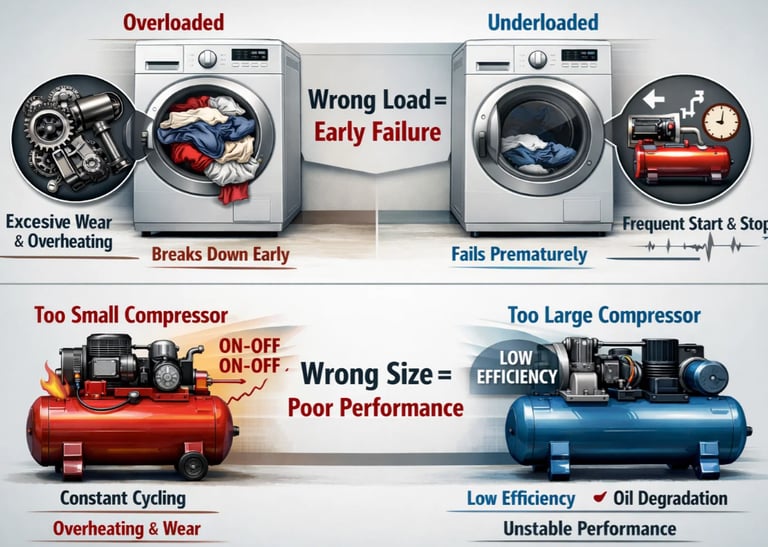
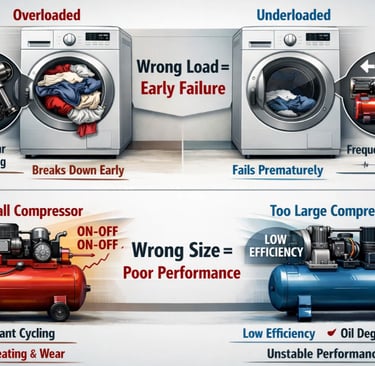
Imagine you buy a super high-end washing machine—top brand, expensive, made in a good country.
But if you overload it or run it too empty:
No matter how advanced or well-built the machine is, if it’s not used within its ideal load range, it will fail prematurely.
The same goes for air compressors: the brand, price, or origin doesn’t matter if the size is wrong. The wrong size leads to frequent load changes, low efficiency, shortened oil life, and unstable system performance.
Sizing determines:
Load / unload frequency
Energy efficiency
Oil life
Component wear
System stability
A perfectly built compressor will still fail early if it runs outside its ideal load range.
2.Oversized Air Compressor Problems Most Users Ignore:
Short Cycling: The Silent Killer
An oversized air compressor reaches target pressure too fast, then unloads repeatedly.
This “short cycling” causes:
Excessive motor starts
Heat buildup
Valve and contactor failure
Control system stress
Ironically, a bigger compressor often fails earlier than a properly sized one.
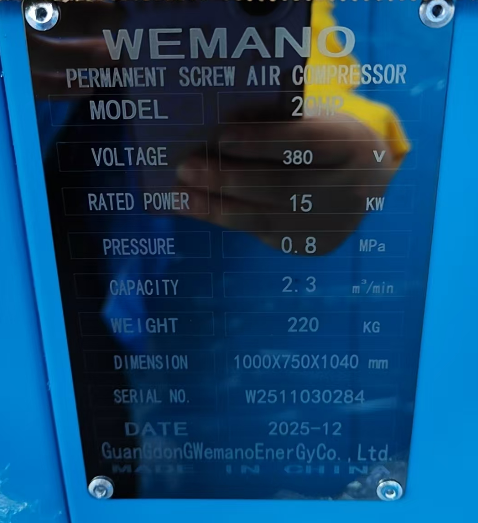
3.Why Compressor Nameplate Data Doesn’t Reflect Real Energy Efficiency?
For example, let's take our own products as an example:
More frequent load and unload cycles.
Continuous power consumption during low or zero air output.
Reduced energy efficiency during standby and pressure recovery.
Increased stress on lubricant and internal components.
These operating characteristics are not shown on the compressor nameplate, but they directly affect energy consumption, maintenance intervals, and total operating cost over time.
In general:
Rated pressure defines design limits.
Operating pressure behavior defines real efficiency.
4.How Sizing Mistakes Turn Into Maintenance Nightmares?
Wrong sizing leads to:
Frequent oil changes
Repeated valve replacements
Unexpected downtime
Rising spare part costs
Maintenance teams often fix symptoms — not the root cause.
5.How to Know If Your Air Compressor Is the Wrong Size?
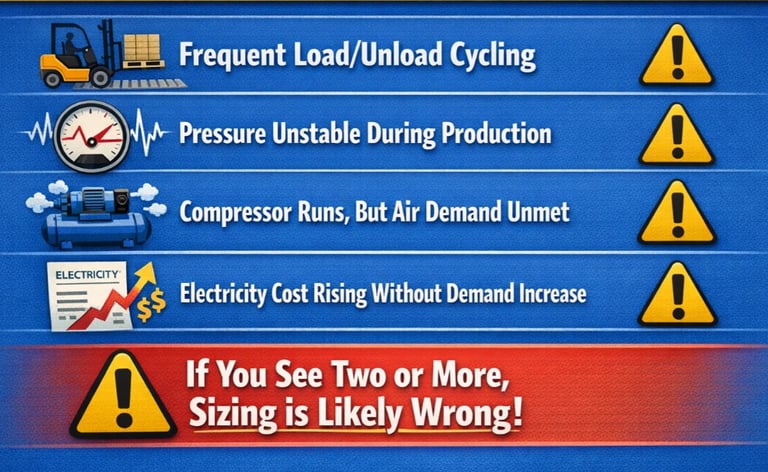
Quick Checklist:
Frequent load/unload cycling
Pressure unstable during production
Compressor runs but air demand still unmet
Electricity cost rising without demand increase
According to compressed air system efficiency studies-https://www.energy.gov/eere/ito/compressed-air-systems. If you see two or more, sizing is likely wrong.
6.What You Should do Next?
(1)Oversized Air Compressor Problems: Why Bigger Is NOT Better?
(2)Undersized Air Compressor Issues: Pressure Loss & Downtime.
(3)How to Fix a Wrong-Sized Air Compressor Without Replacing It?
Conclusion:
Air compressor sizing is not about “bigger or smaller”.
It’s about matching demand, duty cycle, and system behavior.
If sizing is wrong, performance, energy efficiency, and reliability will all collapse — slowly, but inevitably.
If you have any related needs, you can contact us for free professional guidance.