What Happens If a Screw Air Compressor Is Oversized?
An oversized screw air compressor causes short cycling, energy waste, and early failure. Learn the hidden problems oversizing creates and how to identify them.
Sofiya
1/29/20263 min read
1.What Happens If a Screw Air Compressor Is Oversized?
An oversized screw air compressor does not improve reliability or performance.
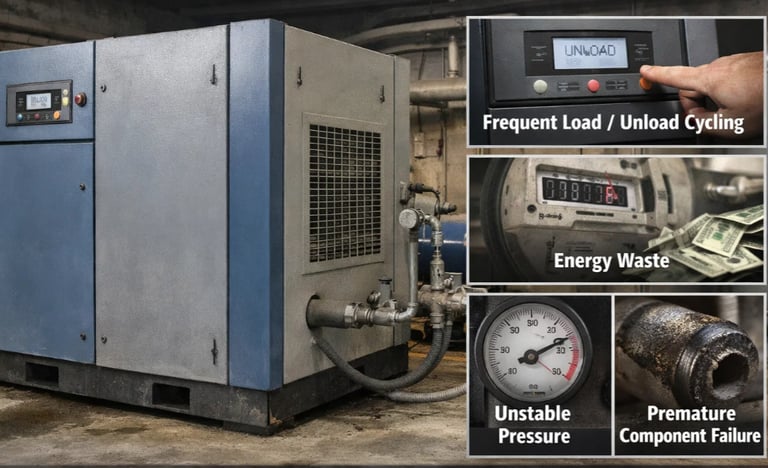
Instead, it causes frequent load/unload cycling, energy waste, unstable pressure, and premature component failure — even when the compressor itself is high quality.
Oversizing is one of the most common and most expensive air compressor sizing mistakes in industrial systems.
2.Why Oversized Screw Air Compressors Are So Common?
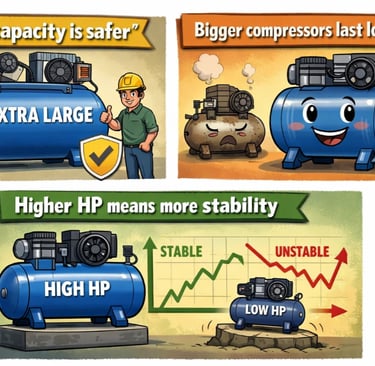
Many buyers oversize compressors intentionally, believing that:
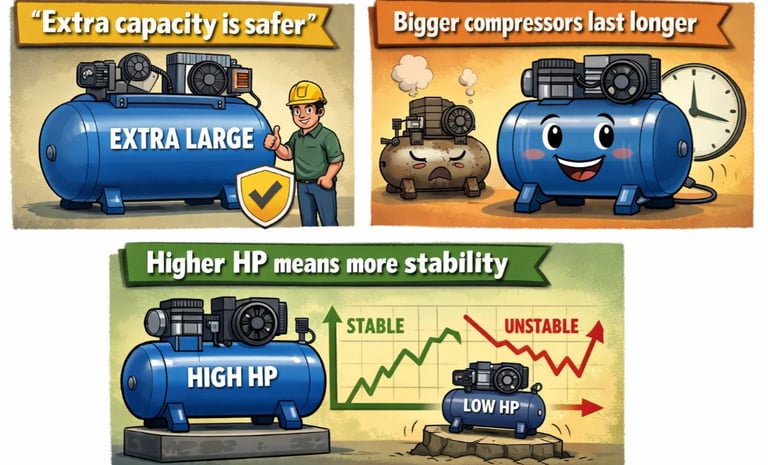
“Extra capacity is safer”
“Bigger compressors last longer”
“Higher HP means more stability”
In reality, these assumptions ignore how screw air compressors are designed to operate.
A screw air compressor is engineered to run within a specific load range, not at maximum size with minimal demand. When actual air consumption stays far below rated capacity, the compressor operates outside its optimal efficiency zone.
3.What Actually Happens Inside an Oversized Screw Air Compressor?
When a screw air compressor is oversized for the system demand, it reaches target pressure very quickly and then unloads repeatedly. This behavior is known as short cycling.
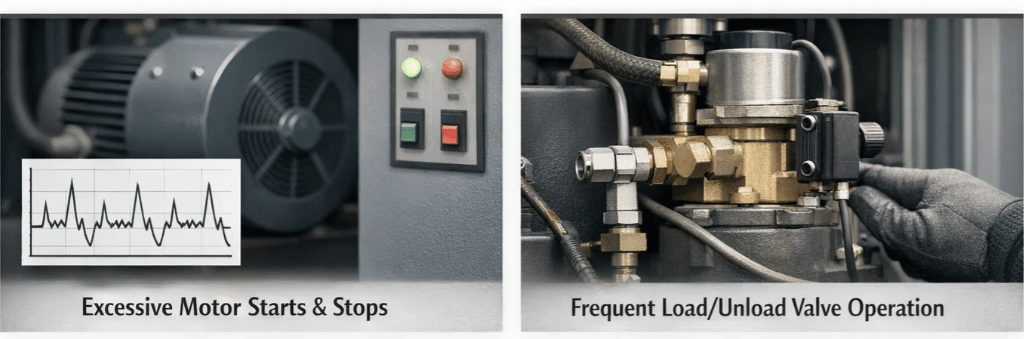
Short cycling causes several hidden problems:
Excessive motor starts and stops
Frequent load/unload valve operation
Heat buildup inside the airend
Unstable oil temperature and lubrication breakdown
Increased stress on electrical components and controls
Although production may appear normal, internal wear accelerates quietly.
Ironically, a larger compressor often fails earlier than a properly sized one.
4.Energy Waste: The Cost You Don’t See on the Nameplate:
Oversized compressors consume significant power even when producing little or no useful air.
Typical energy losses include
Power draw during unloaded operation
Repeated pressure recovery cycles
Inefficient part-load performance
Higher standby energy consumption
A nameplate shows rated power and airflow, but it does not reflect real operating efficiency under low-load conditions.
Over time, these losses translate into higher electricity bills without any increase in production output.
5.Rule of Thumb: When a Compressor Is Likely Oversized
Rule of thumb:
If a screw air compressor operates below 65–70% of its rated airflow for long periods, it is likely oversized.
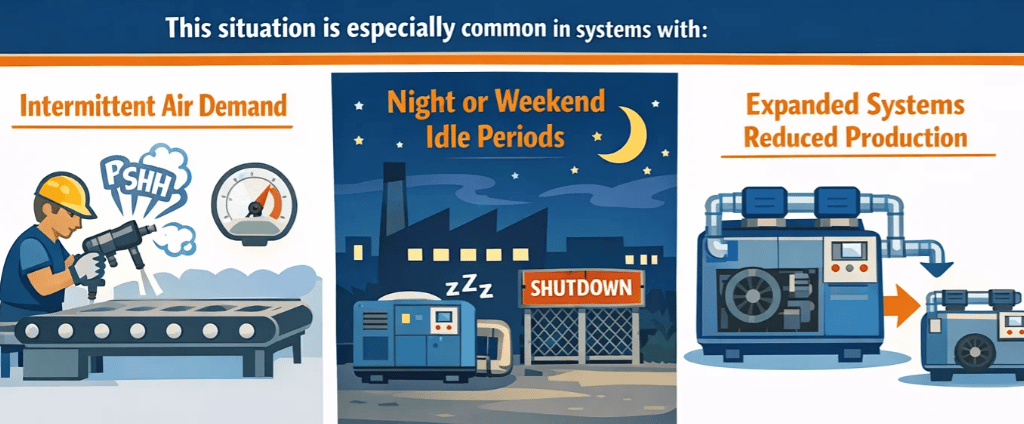
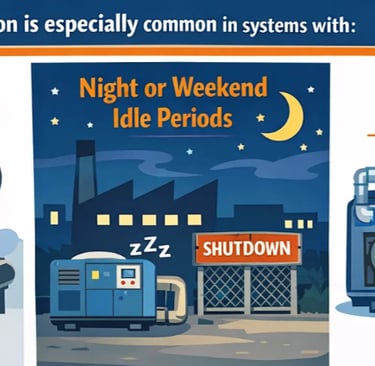
This situation is especially common in systems with:
Intermittent air demand
Night or weekend idle periods
Expanded systems that later reduced production
6.Common Signs Your Screw Air Compressor Is Oversized:
You may already be operating an oversized compressor if you notice:
Frequent load/unload cycling
Compressor running with little or no air demand
Stable pressure but rising electricity costs
Increased oil consumption or shorter oil life
Premature failure of valves, contactors, or sensors
These symptoms are often treated as maintenance issues, but the root cause is usually incorrect sizing.
7.Why Oversizing Reduces Reliability Instead of Improving It?
Many users assume that a larger compressor works “less hard.”
In reality, screw compressors suffer most when they run too lightly loaded.
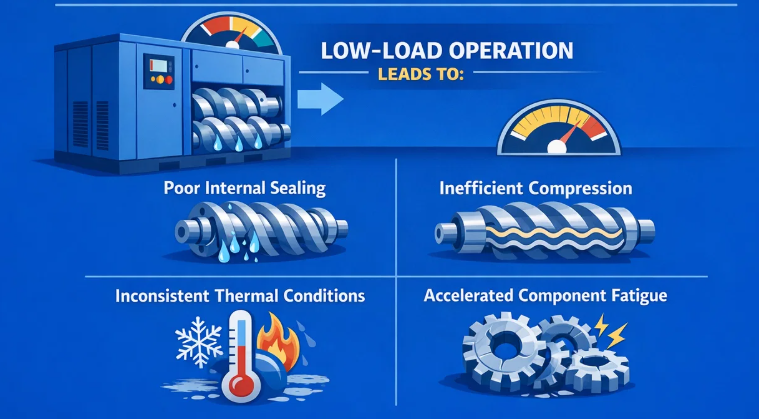
Low-load operation leads to:
Poor internal sealing
Inefficient compression
Inconsistent thermal conditions
Accelerated component fatigue
Reliability comes from stable operation, not excess capacity.
8.Better Solutions Than Oversizing:
If air demand is uncertain or fluctuates, better options include:
Proper airflow analysis and duty cycle evaluation.
Variable Speed Drive (VSD) compressors.
Smaller base-load compressor combined with trim control.
Pressure band optimization and storage optimization.
These solutions reduce cycling, stabilize operation, and lower long-term operating costs.